

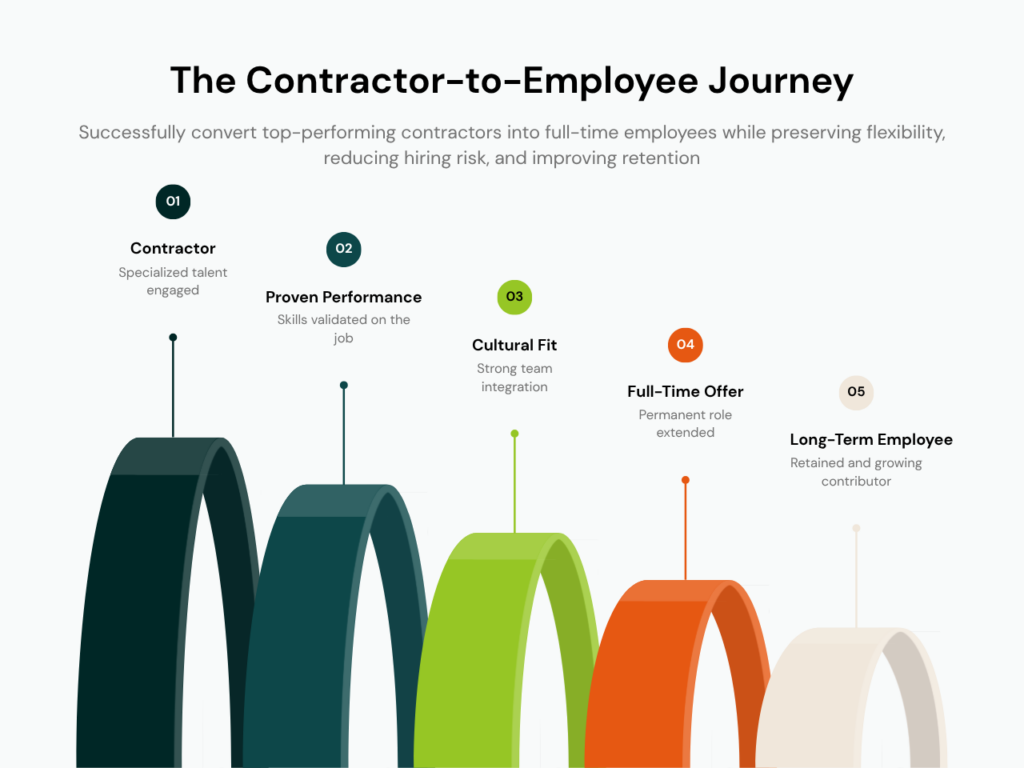
The hiring market has made one thing clear: companies are becoming far more selective about full-time hiring decisions. As a result, contract-to-hire models have become a practical way to evaluate talent before making a long-term commitment.
For employers, the benefits are obvious. You get to see how someone performs in real projects, collaborates with your team, and adapts to your culture before extending a permanent offer.
But when a contractor proves to be a top performer, converting them into a full-time employee isn’t always straightforward.
The best contractors often value flexibility, autonomy, and control over their careers. A permanent position has to offer more than a job title and a salary increase. It has to provide a compelling reason to make the switch.
Sell the Entire Opportunity, Not Just the Salary
Many contractors earn higher hourly rates because they’re responsible for their own benefits, taxes, and periods between assignments.
When presenting a full-time offer, focus on the complete value of employment:
- Health insurance and retirement contributions
- Paid time off and company holidays
- Performance bonuses and incentives
- Professional development opportunities
- Career progression and leadership pathways
Equally important is stability. Contractors understand the reality of managing their next engagement, handling administrative work, and navigating gaps between projects. Full-time employment removes much of that uncertainty.
Don’t Eliminate the Flexibility They Value
One of the biggest reasons professionals choose contract work is freedom.
If a contractor has been successful working remotely, managing their own schedule, or operating with a high degree of independence, avoid replacing that flexibility with unnecessary restrictions.
The transition should feel like an expansion of the existing relationship, not a complete change in how they work.
Focus on outcomes, accountability, and trust rather than rigid processes that add little value.
Make the Transition Easy
Administrative friction can quickly undermine a strong offer.
Before beginning the conversion process:
- Review any staffing agency agreements or contractor terms
- Understand conversion fees or buyout clauses
- Coordinate timelines between hiring managers, HR, procurement, and legal teams
- Ensure compensation, benefits, and start dates are clearly communicated
The onboarding process also deserves attention.
A contractor joining full-time already understands the day-to-day work. They don’t need to be treated like a brand-new hire. Instead, focus onboarding on company strategy, long-term goals, leadership visibility, and cross-functional relationships.
Start Building the Relationship Early
The easiest contractor conversions don’t begin when the offer letter is drafted.
They begin on day one.
Contractors who feel included are far more likely to envision a future with the organization.
That means:
- Including them in relevant team discussions
- Giving them visibility into business objectives
- Recognizing their contributions
- Creating opportunities to build relationships across the company
If a contract role could eventually become permanent, be transparent about that possibility from the beginning. Ongoing conversations create alignment and eliminate surprises later.
The Bottom Line
Your best contractors have already cleared the hardest hurdles. They know your systems, understand your team dynamics, and have demonstrated their ability to deliver results.
Converting proven contract talent into full-time employees reduces hiring risk, shortens ramp-up time, and preserves valuable institutional knowledge.
The companies that do it successfully recognize a simple reality: top contractors aren’t looking for just another job. They’re looking for a long-term opportunity that respects the flexibility and independence that made them successful in the first place.